Who's Winning (and Losing) in the $50 Billion Kids Shoe Market
A competitive analysis of the top 5 kids footwear brands by revenue, including Ten Little's DTC play.
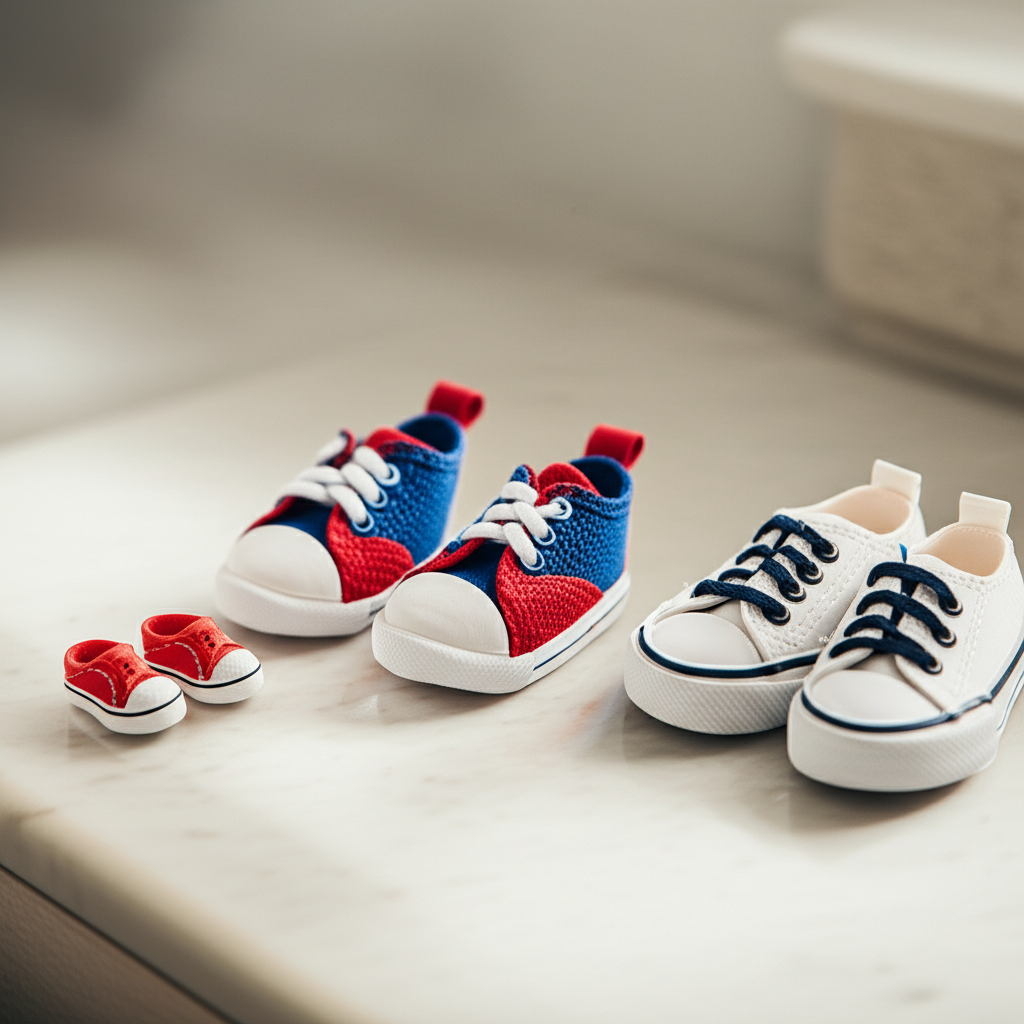
The global kids’ footwear market is worth over $50 billion and growing at 6-8% annually. But within that growth, there are clear winners, clear losers, and a few DTC disruptors trying to rewrite the rules. Here’s who’s where—and why.
Market Snapshot
- Global market size (2025): $50-54 billion
- Projected (2030): $79 billion (CAGR 8.2%)
- North America share: 33% of global (~$11 billion)
- U.S. share of North America: 73%
- Online channel: 35%+ of total sales
The market is driven by athletic and casual styles, with rising disposable incomes and increasing demand for branded footwear among parents who grew up as sneakerheads themselves.
The Top 5 by Revenue
1. Nike (incl. Jordan Brand) — THE WINNER
Market share: ~24.9% of kids’ athletic footwear (late 2025) Status: Dominant but under pressure
Nike remains the category leader by a wide margin. Jordan Brand, in particular, drives premium kids’ sales—parents are willing to pay up for miniature versions of the sneakers they covet. The kids’ segment benefits from Nike’s global distribution, brand heat, and ability to cross-market with parents.
Why they’re winning:
- Brand equity is unmatched
- Jordan retros create “matching with dad” moments
- Strong presence in back-to-school retail
- Performance credibility carries into kids’ athletic
Risk: Nike’s overall business has faced headwinds (inventory issues, direct-to-consumer pullback). Kids isn’t immune.
2. Skechers — THE GROWER
Total revenue (2024): $8.97 billion (company-wide) Status: Consistent mid-single-digit growth
Skechers has built a quietly dominant kids’ business on comfort, accessibility, and aggressive price points. Their light-up shoes, slip-ons, and character licenses (Pokémon, etc.) resonate with both kids and budget-conscious parents.
Why they’re winning:
- Comfort-first positioning appeals to parents
- Accessible pricing ($30-50 sweet spot)
- Wide retail distribution (Walmart, Kohl’s, DSW)
- Character and novelty licenses drive impulse buys
Edge: Skechers doesn’t chase hype—they chase volume. In kids’ footwear, that’s often the smarter play.
3. New Balance — THE MOMENTUM PLAY
Total revenue: $7.8B (2024) → $9.2B (2025), +19% YoY Status: Hottest growth story in footwear
New Balance is the surprise winner of the 2024-2025 cycle. The “dad shoe” trend that propelled styles like the 990 and 2002R in adults has trickled down to kids—parents buying mini-mes of their favorite silhouettes.
Why they’re winning:
- “Dad shoe” trend creates built-in kids demand
- Heritage brand credibility
- Gaining share from Nike in running/lifestyle
- Now targeting $10B in revenue
Insight: New Balance proves that adult heat transfers to kids. When parents are obsessed with a brand, kids’ sales follow.
4. Crocs — MIXED SIGNALS
Total revenue (2024): $4.1 billion (company-wide, 4% growth) Status: Maturing after explosive growth
Crocs’ kids’ business boomed during the pandemic and Jibbitz-mania years. But growth is decelerating—Q4 2025 saw a -3.26% revenue decline. The brand is still strong, but the explosive phase may be over.
Why they’re still relevant:
- Jibbitz customization is crack for kids
- Easy on/off appeals to parents
- Price point ($35-50) hits the sweet spot
- School/camp/casual versatility
Risk: Crocs’ core clog is approaching saturation. They’re pushing sandals and sneakers to diversify, but the magic of the clog may be fading.
5. Stride Rite (Wolverine Worldwide) — THE LOSER
Segment revenue: Down 83% YoY (2024) Status: Restructuring casualty
Stride Rite was the name in kids’ footwear for decades—the brand parents trusted for first walkers and early childhood. But under Wolverine Worldwide’s ownership, it’s been deprioritized. The “Other” segment containing Stride Rite and Hush Puppies plummeted by $269 million (83.4%) from 2023 to 2024.
Why they’re losing:
- Legacy positioning feels dated
- Over-reliance on specialty retail (collapsed channel)
- No digital/DTC playbook
- Brand awareness with Millennial parents is low
- Parent company focused elsewhere (Merrell, Saucony)
The lesson: Heritage means nothing if you don’t adapt. Stride Rite had the trust—and squandered it.
The DTC Disruptor: Ten Little
Founded: 2019 Funding: ~$8 million (Seed led by Kindred Ventures, NextView) Growth: 50% month-over-month (as of 2021) Families served: 100,000+
Ten Little is the most interesting player nobody’s talking about. Founded by Fatma Collins and Julie Rogers, the brand tackles the kids’ footwear market’s biggest pain point: sizing.
Their thesis: Kids’ feet grow unpredictably. Standard sizing doesn’t account for width, arch development, or growth spurts. So parents over-order, return constantly, and end up frustrated. Ten Little uses predictive e-commerce (collecting foot measurements over time) to recommend the right size at the right moment—and ships doctor-recommended shoes designed for healthy foot development.
Why they matter:
- Attacking the 20-28% return rate problem directly
- Subscription/predictive model creates recurring revenue
- Premium positioning ($48-65) with health angle
- DTC margins in a retail-heavy category
The bull case: If Ten Little cracks sizing at scale, they could build the Warby Parker of kids’ shoes.
The bear case: Kids’ footwear is brutally price-sensitive. Most parents won’t pay $60 for shoes their kid will outgrow in 6 months. The TAM at premium price points may be smaller than it looks.
What Separates Winners from Losers
| Factor | Winners (Nike, NB, Skechers) | Losers (Stride Rite) |
|---|---|---|
| Trend relevance | Ride adult trends down to kids | Stuck in “first walker” positioning |
| Channel mix | Omnichannel + strong DTC | Over-indexed to specialty retail |
| Parent appeal | Cool for parents to buy | Feels like grandma’s recommendation |
| Price/value | Clear value at each tier | Muddled positioning |
| Innovation | Fit tech, materials, collabs | Static product lines |
The Case For (and Against) the Kids’ Market
PROS: Why Target Kids
-
Large and growing market — $50B+ globally, 6-8% CAGR. Non-trivial.
-
Non-discretionary — Kids need shoes. Unlike fashion, this isn’t optional.
-
High replacement frequency — Kids outgrow shoes every 4-8 months. Built-in repeat purchase cycle.
-
Brand loyalty seeding — Parents remember what brands they wore as kids. Early imprinting matters.
-
Emotional purchase — Parents want “the best” for their kids. Easier to justify premium.
-
Less trend volatility — Kids’ fashion is simpler. You don’t need to chase drops the way adult sneaker brands do.
CONS: Why It’s Harder Than It Looks
-
Return rates are brutal — 20-28% of online orders come back. Sizing inconsistency is the culprit. This destroys margins.
-
Sizing is a nightmare — Kids grow at different rates. No standard sizing. Foot shape varies. Every size run is a gamble.
-
Price sensitivity — Parents know the shoes will be outgrown. Psychological ceiling on what they’ll pay (~$50-60 for most, ~$100 max for premium).
-
Lower margins — More SKUs (size x width x age), smaller units, same fixed costs. Economics are worse than adult.
-
Shorter product lifecycle — A hot kids’ style might last 12-18 months. Less time to amortize development costs.
-
Counterfeit competition — Kids’ Jordans and Yeezys are heavily counterfeited. Marketplace leakage is real.
-
Gatekeepers — Unlike adult, you’re selling to parents, not the end user. Different value proposition.
Strategic Implications
If you’re entering kids’ footwear:
-
Solve sizing or suffer. The brands winning are either big enough to absorb returns (Nike, Skechers) or attacking the problem head-on (Ten Little). Everyone in between gets crushed.
-
Ride adult trends down. Don’t try to create kids-specific heat. Miniaturize what parents already want.
-
Distribution is destiny. Mass retail (Walmart, Target) owns the volume. DTC owns the margin. Pick your lane.
-
Price with outgrow math. Parents calculate cost-per-month-of-use. A $50 shoe worn for 6 months is better value than a $30 shoe that falls apart in 2.
-
Don’t fight for fashion. The athletic and casual segments are where the growth is. Dress shoes and specialty (first walkers, etc.) are shrinking or stagnant.
This analysis reflects publicly available data as of February 2026. For deeper dives into specific brands or market entry strategy, contact Footwear Intel Research.
Stay ahead of the market
Weekly footwear intelligence in your inbox.