How One TikTok Creator Became Walmart's Unofficial Shoe Buyer
The @allyhovious effect: when influencer content drives more discovery than the retailer's own marketing.
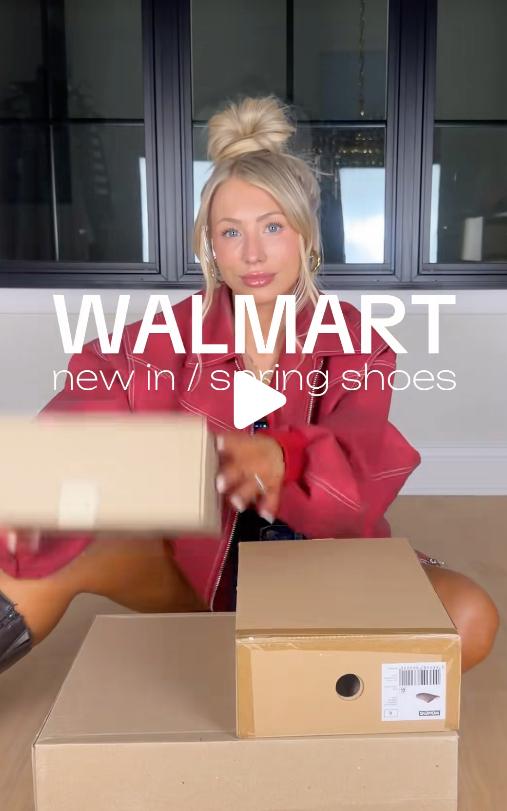
When Ally Hovious posts a Walmart shoe haul, her followers don’t just watch — they sprint to the store. Across four videos analyzed by Footwear Intel in early 2026, @allyhovious generated over 12,000 combined engagements (likes, comments, saves, shares) showcasing footwear from a retailer that, until recently, wasn’t anyone’s idea of a fashion destination.
The most telling metric isn’t the likes. It’s the comments.
The Discovery Problem She’s Solving
Scroll through the comments on any @allyhovious shoe video and a pattern emerges immediately:
“Where can I find the black shoes you have on??”
“I can’t find these on the store front. What day should I look for?”
“Links?”
“I don’t understand why you don’t tell us the names of these things and how we could get a link to these you also could make more money”
That last comment — with 47 likes, the most-upvoted across all four videos — captures the core value proposition of creators like Ally: she’s doing the merchandising work that Walmart’s own e-commerce and in-store experience fails to do.
Walmart stocks thousands of shoe SKUs. Most shoppers will never find the on-trend pieces buried among the practical purchases. Ally does the curation, the styling, the try-on — and suddenly a $24.96 pair of woven ballet flats becomes a must-have.
The Numbers
| Metric | @allyhovious Walmart Shoe Content |
|---|---|
| Average likes per video | 2,000-7,000 |
| Save rate | High (400-900+ saves per video) |
| Share rate | 200-500 per video |
| Comment themes | Product discovery, purchase intent, sizing questions |
The save-to-like ratio is particularly notable. When users save a video at rates of 15-20%, it signals strong purchase intent — they’re bookmarking it for the shopping trip.
What She’s Showing
Ally’s Walmart hauls aren’t random. She’s curating a specific aesthetic:
- Woven textures (the Bottega-coded look, democratized)
- Western boots (clean, architectural, not costume-y)
- Ballet flats (the quiet luxury staple)
- Moccasins with fringe details (boho-adjacent but elevated)
- Chunky sneakers (still relevant for the casual crowd)
In other words: she’s identifying which mass-market pieces pass the “looks expensive” test. Her followers trust her eye, and they’re rewarded when they show up to Walmart and find the exact items she featured.
The Influencer-Retailer Dynamic
What’s striking about @allyhovious is what she’s not doing. There’s no obvious #ad or #sponsored disclosure on most of her Walmart content. She appears to be shopping these items herself, discovering them organically, and sharing because she’s genuinely excited.
This is the holy grail for retailers: earned media that feels authentic because it is.
Compare this to Walmart’s official influencer partnerships — polished, tagged, and immediately discounted by savvy consumers as paid promotion. Ally’s content performs better because it reads as peer recommendation, not advertising.
The Gap She Exposes
The flip side: every comment asking “where can I find this?” is a conversion Walmart might be losing.
Her followers want to buy. They’re motivated. But Walmart’s product discoverability — both online search and in-store navigation — isn’t meeting them halfway. Ally doesn’t always include product names or links (a point of frustration noted in multiple comments). When she does, they’re often buried in a link-in-bio aggregator that requires extra clicks.
The retailer that figures out how to seamlessly connect influencer content to instant purchase will capture enormous latent demand. For now, that connection remains frustratingly manual: watch video → go to store → hope you find it → maybe ask an employee who has no idea what you’re talking about.
What Brands Can Learn
-
Micro-curation matters more than mass assortment. Ally’s value isn’t showing everything Walmart has — it’s showing the 10% worth buying.
-
Earned influencer content outperforms paid. When someone shops with their own money and gets excited, it shows.
-
Discovery is the bottleneck. The products exist. The demand exists. The friction is in connecting them.
-
Comments are a goldmine. “I need all of them” and “I’m running to Walmart” aren’t just engagement — they’re purchase intent data.
-
Trust transfers. Her followers trust her taste. When she validates Walmart as a style destination, that trust extends to the retailer.
The Bigger Picture
Creators like @allyhovious represent a structural shift in how consumers discover products at mass retailers. The old model — circular ads, endcap displays, homepage banners — is being supplemented (and sometimes replaced) by individual tastemakers who do the filtering work for their audiences.
For Walmart’s footwear business, that’s both opportunity and warning. The opportunity: influencer content is driving real traffic and sales with minimal marketing spend. The warning: Walmart doesn’t control this channel, and the creator-to-purchase pipeline remains leaky.
The brands and retailers who thrive will be those who figure out how to support creators like Ally without co-opting them — and how to capture the demand she generates before it evaporates in a frustrating search through endless aisles.
For now, @allyhovious keeps posting hauls. Her followers keep showing up to Walmart. And somewhere in the comments, someone is still asking: “Links?”
Stay ahead of the market
Weekly footwear intelligence in your inbox.