Margiela's Replica vs. the Competition: Why Quiet Luxury Is Killing the Logo Sneaker
Golden Goose delayed its IPO. Common Projects is discounting. But Margiela's Replica keeps selling. Here's why.
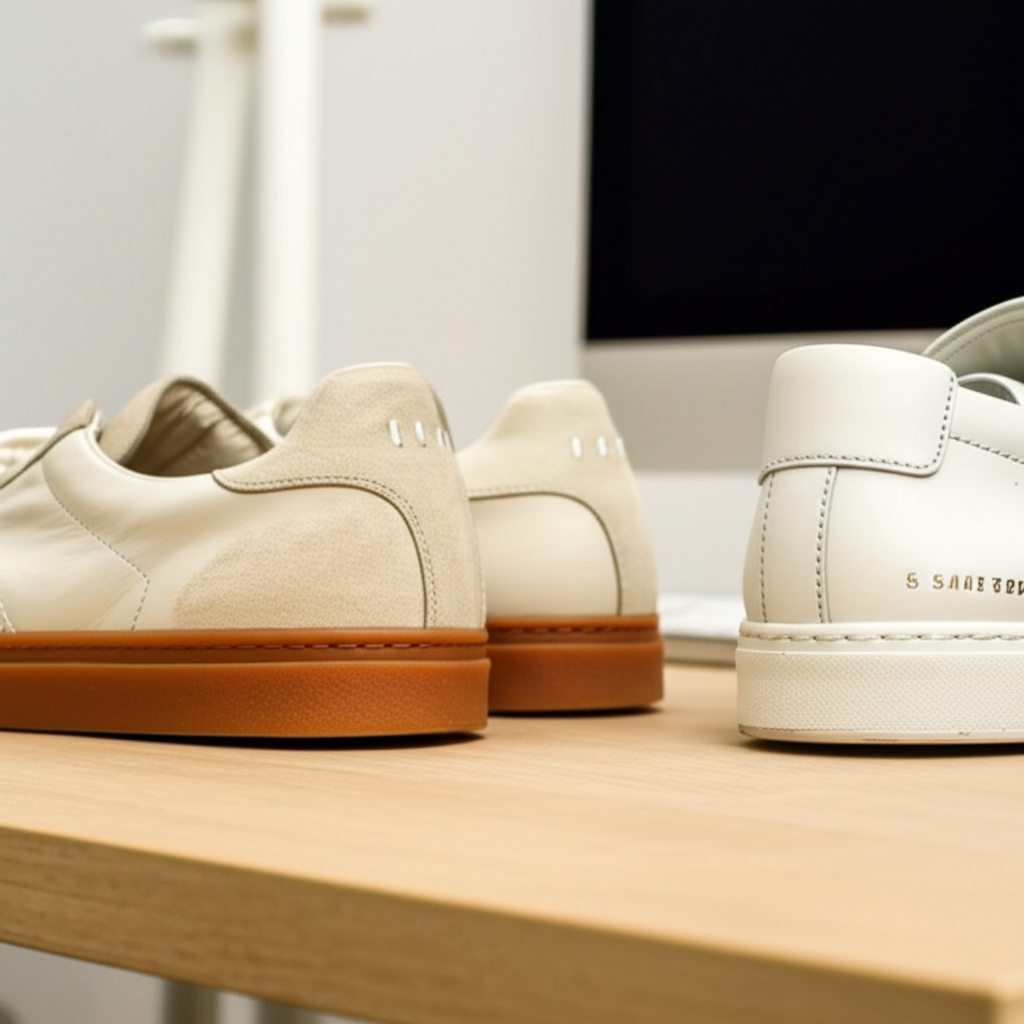
Golden Goose delayed its IPO. Common Projects is showing up on sale racks. But Maison Margiela’s Replica sneaker keeps quietly selling out. The luxury sneaker market is splitting in two—and understanding who wins (and why) tells you everything about where footwear is heading.
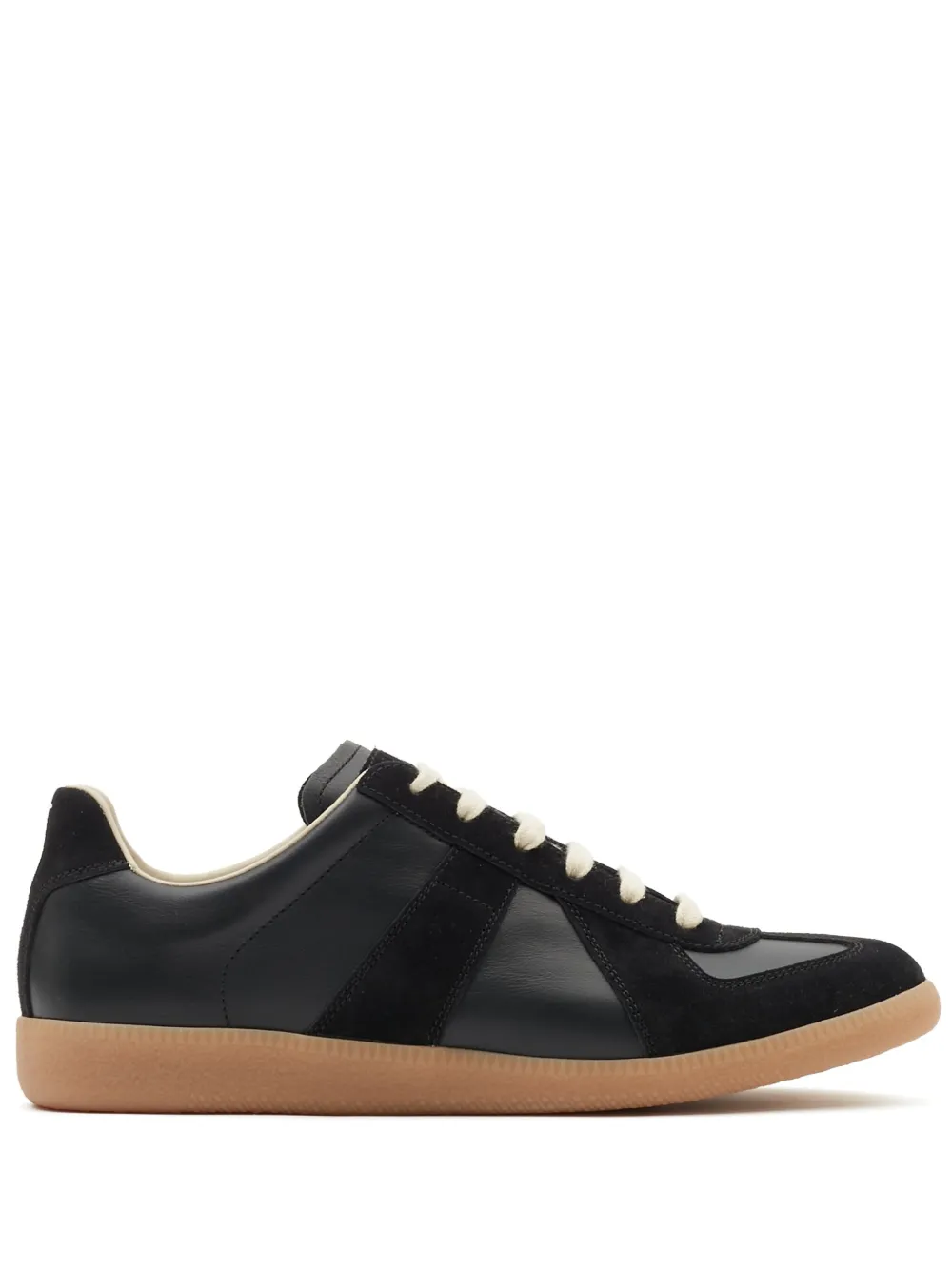
Something shifted in 2024. After a decade where luxury sneakers could do no wrong—where Golden Goose’s pre-distressed $500 kicks and Common Projects’ minimalist $450 Achilles became status symbols as recognizable as any designer handbag—the market started showing cracks.
Golden Goose, the Italian brand known for sneakers that look “lived-in” straight out of the box, postponed its IPO in June 2024 citing “severe volatility in the European luxury market.” The company had been targeting a valuation of up to €1.86 billion. By late 2025, they were still waiting for the right moment.
Meanwhile, Margiela’s Replica—a sneaker that’s been in production since 1999, modeled after 1970s German Army Trainers—keeps selling at full price.
The difference isn’t random. It’s a case study in what consumers actually want when “quiet luxury” stops being a trend and becomes the default.
The Three-Way Split
The luxury sneaker market has quietly stratified into three distinct camps. Understanding where each brand sits explains their diverging fortunes.
Golden Goose: Manufactured Authenticity
Price: $530–$695
The pitch: Pre-distressed luxury sneakers that look like you’ve owned them forever
The problem: The entire value proposition depends on conspicuous consumption disguised as casual cool
Golden Goose built a $500M+ business on a simple insight: people want sneakers that look worn-in without actually wearing them in. The signature star logo, the intentional scuffs, the “distressed” leather—it’s luxury that performs effortlessness.
But here’s what changed: in 2019, showing up in Golden Goose was a subtle flex. In 2026, everyone recognizes them. The star logo has become as identifiable as any chunky designer logo, defeating the entire premise.
| Metric | Golden Goose |
|---|---|
| Revenue growth (H1 2025) | +13% |
| IPO status | Postponed |
| Core demographic | 25-45, fashion-forward |
| Resale value retention | Declining |
The 13% revenue growth sounds healthy until you realize luxury goods overall were flat. Golden Goose is still growing, but their IPO delay signals institutional investors see risk in a brand whose core proposition—looking effortlessly cool—gets harder to deliver as ubiquity increases.
Common Projects: The Original Minimalist
Price: $450–$550
The pitch: “The best white sneaker money can buy”
The problem: A decade of copycats eroded the differentiation
Common Projects essentially invented the modern luxury minimal sneaker category with the Achilles Low. Clean lines, Italian leather, gold serial number stamped on the side—no logos, just craftsmanship.
For years, this was enough. The Achilles became the “IYKYK” sneaker of fashion editors and creative directors. But by 2024, every brand from Cole Haan to Koio to Oliver Cabell had launched virtually identical alternatives at half the price or less.
Common Projects’ response? More frequent sales. The brand that once held firm at full price now shows up regularly in 30-40% off promotions at major retailers. Search “Common Projects Achilles” and Google’s AI overview notes they’ve become “a high-demand, evergreen, and frequently discounted item during major sales events.”
That’s not a good sign for a luxury brand.
Maison Margiela Replica: The Anti-Status Status Symbol
Price: $530–$675
The pitch: A deconstructed copy of a 1970s German Army Trainer
The advantage: Intellectual fashion credibility that can’t be knocked off
Here’s where it gets interesting. The Margiela Replica is, by design, a copy. The house has been making them since 1999, explicitly positioning them as a replica of vintage GAT (German Army Trainer) sneakers. The only visible branding is Margiela’s signature four white stitches where a label would normally be.
This matters for several reasons:
-
The concept can’t be knocked off. The whole point is that it’s a replica. Making a “copy” of Margiela’s replica misses the intellectual joke entirely.
-
It rewards knowledge over visibility. You have to know what you’re looking at. There’s no star logo, no gold serial number—just four stitches that mean nothing unless you understand Maison Margiela’s brand philosophy.
-
It aligns perfectly with quiet luxury. Google’s AI overview of current trends explicitly calls out Margiela Replicas as “a staple in the ‘quiet luxury’ fashion trend, characterized by minimalist, unbranded, and high-quality design.”
-
Fashion insiders can’t dismiss it. Unlike Golden Goose (which fashion people secretly mock) or Common Projects (which has become generic), Margiela carries genuine fashion credibility.
The Sneaker Fatigue Problem
The larger context: consumers are tired of sneakers. Not tired of wearing them—but tired of them as status symbols.
Business Insider reported in late 2025 that “loud, heavily branded footwear, once a status symbol, is losing momentum as fashion shifts toward quiet luxury.” WWD documented the rise of the “sneaker loafer” trend—hybrid shoes that offer sneaker comfort without sneaker aesthetics.
This isn’t a blip. It’s the end of a cycle that started with Balenciaga’s Triple S in 2017 and the chunky sneaker arms race that followed. For nearly a decade, luxury houses competed on who could make the most outrageous sneaker silhouette.
The pendulum is swinging back. And when it does, the brands positioned as “timeless” rather than “trendy” benefit.
| Brand | Position in Quiet Luxury Shift |
|---|---|
| Margiela Replica | Strong — conceptual, understated |
| Common Projects | Weakening — too widely copied |
| Golden Goose | Vulnerable — logo fatigue setting in |
What This Means for the Market
Three implications for footwear:
1. “Worn-in” is out; “well-made” is in.
Golden Goose’s manufactured distressing was a shortcut to authenticity. The market now wants actual quality that will age well—not pre-aged product that starts deteriorating immediately.
2. Fashion credibility matters more than fashion visibility.
The Margiela Replica works because it’s a reference that rewards knowledge. The luxury consumer in 2026 wants to feel smart, not just look expensive. Brands without intellectual depth will struggle.
3. The logo backlash extends to subtle logos.
Common Projects’ gold serial number used to feel like anti-branding. Now it’s just… branding. Same with Golden Goose’s star. Any consistent visual identifier becomes a logo over time—and logos are currently out.
The Investment Calculation
If you’re buying one pair of luxury sneakers this year, the math looks like this:
| Factor | Margiela Replica | Common Projects | Golden Goose |
|---|---|---|---|
| Full price | $530-$675 | $450-$550 | $530-$695 |
| Typical discount | Rare | 30-40% | 20-30% |
| Resale value | Strong | Declining | Declining |
| Fashion credibility | High | Medium | Contested |
| Recognizability | Low (intentional) | Medium | High |
The Margiela Replica is more expensive at full price, but it’s the only option that holds value—both literally and culturally.
The Bottom Line
Golden Goose’s IPO delay isn’t just about market timing. It’s a signal that investors see the ceiling on “manufactured authenticity” as a business model.
Common Projects remains a solid product, but they’ve lost the “only game in town” positioning that justified premium pricing. The discounting trend suggests they know it.
Margiela’s Replica, paradoxically, benefits from being a “copy.” The brand’s intellectual framework—Martin Margiela’s deconstruction of fashion itself—gives it depth that pure aesthetic competitors can’t replicate (pun intended).
For consumers navigating the quiet luxury era, the lesson is clear: the sneakers that will hold value are the ones that never depended on being noticed in the first place.
The shift from sneakers to loafers and dress shoes continues to accelerate. For coverage of what’s replacing the luxury sneaker in professional settings, see our analysis of the oxford resurgence and ruched loafer alternatives.
Stay ahead of the market
Weekly footwear intelligence in your inbox.