The Oxford Resurgence in Corporate America
Men's dress shoes are experiencing double-digit growth as return-to-office mandates reset workplace footwear standards and brown leather outpaces sneakers.
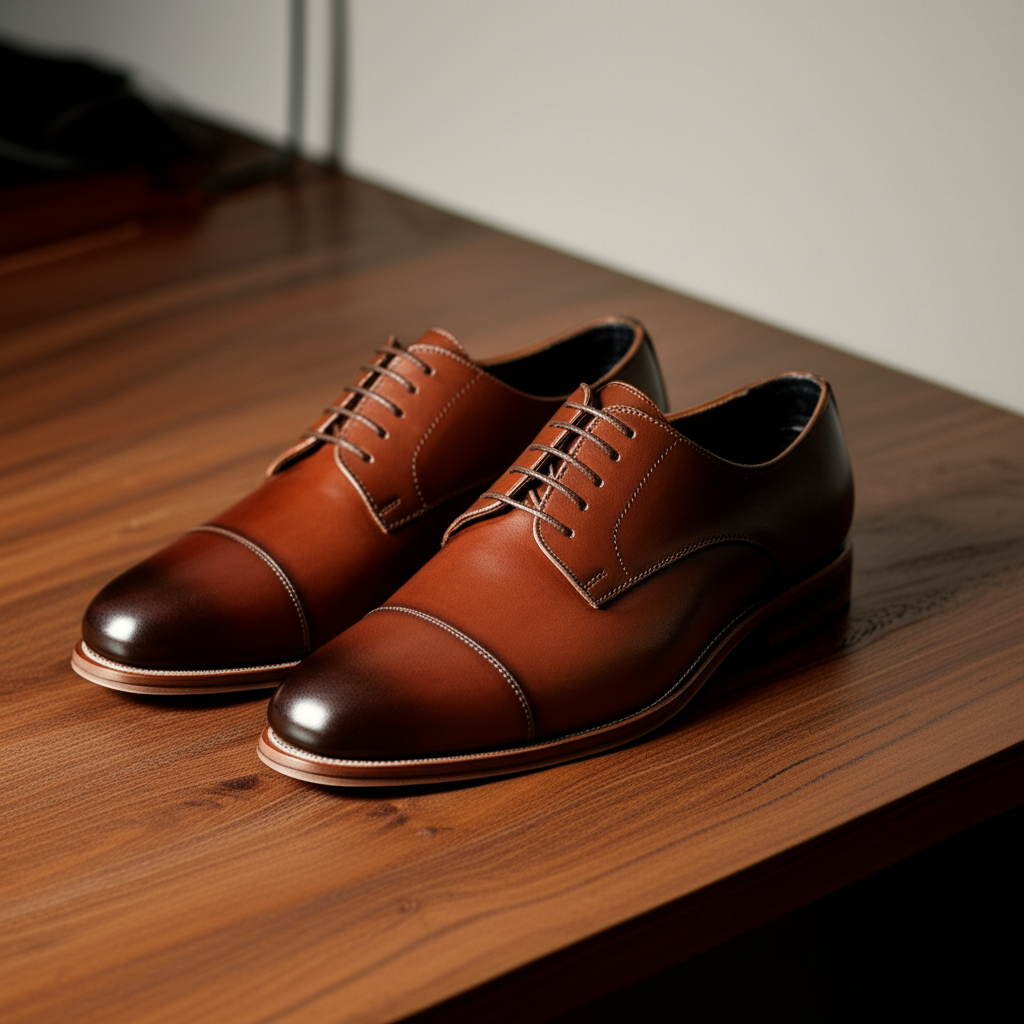
The sneaker’s decade-long dominance is fading as corporate America rediscovers polished leather.
For nearly a decade, the American office floor belonged to the sneaker. White leather minimalists. Designer high-tops. The ubiquitous Common Projects clone. Post-pandemic, the casual shoe became so normalized that Bloomberg felt compelled to ask in January 2026: “Can You Still Wear Sneakers to Work?”
The question itself signals the shift. The answer, increasingly, is no—or at least, not without consequence.
The Data Behind the Turn
Mass retail point-of-sale data tells a story that fashion editorials are only beginning to acknowledge. Men’s dress shoe categories—oxfords, derbys, monk straps, and classic loafers—are experiencing double-digit unit growth for the first time since 2019. Meanwhile, casual athletic footwear for men has plateaued, with certain sneaker silhouettes seeing outright declines in sell-through velocity.
The shift isn’t uniform. It’s most pronounced in traditional brown leather—cognac, tan, and burnished walnut tones are dramatically outpacing black dress shoes at retail. This aligns with the broader “quiet luxury” movement that has made neutral, earth-toned wardrobes the default for professionals seeking to project understated competence rather than flashy wealth.
Return to Office, Return to Form
The timing is no accident. As mandated office returns became the norm through 2025, dress code expectations quietly reset. The Business Journals reported in January 2026 that workplace attire standards are “resetting”—not to pre-pandemic formality, but to something new: polished flexibility.
Google’s AI-powered search synthesis now describes the 2025-2026 workplace footwear standard in stark terms: “Leather Oxford shoes, Derby shoes, loafers, and Chelsea boots are the standard” for men. Athletic sneakers, canvas shoes, and casual runners are “considered inappropriate” in formal corporate settings.
This isn’t your father’s rigid dress code. It’s a hybrid expectation: comfort is still valued, but it must be delivered in a refined package. The “dress sneaker”—once celebrated as the best of both worlds—is now seen as a compromised half-measure that satisfies neither camp.
The Styles Driving the Comeback
The Monk Strap Revival
The single and double monk strap, with their distinctive buckle closures, are experiencing what Just Men’s Shoes calls “a major return.” The style bridges the gap between slip-on convenience and dress shoe sophistication—perfect for the professional who still values efficiency but wants to signal intentionality.
The Plain-Toe Derby
Less formal than an Oxford but more polished than a loafer, the plain-toe Derby has become the workhorse of the modern business casual wardrobe. It pairs equally well with tailored trousers and premium denim, making it the versatile essential that dress sneakers aspired to be.
The Structured Loafer
The penny loafer and horse-bit loafer have “cemented their place as the versatile men’s shoe champion,” according to industry analysis. Crucially, 2026’s winning loafers feature comfort-driven construction—cushioned insoles, flexible outsoles—that make them viable for all-day wear without sacrificing the clean silhouette.
What’s Fading
The casualties are specific. Chunky “dad sneakers” that dominated 2019-2022 have lost momentum. Basketball-inspired silhouettes—once crossover hits from the court to the conference room—are being overtaken by low-profile “torpedo” sneakers when sneakers are worn at all. The late Virgil Abloh predicted this reset back in 2019, asking: “How many more sneakers can we own?”
The mass market has seemingly found its limit.
The Cultural Undercurrent
GQ’s 2025 menswear trend report identified a broader shift: the necktie “roared back into mainstream,” prep aesthetics returned, and fashion increasingly “mirrors corporate ennui” as counterculture in a post-streetwear era.
When wearing a tie becomes a form of rebellion against casualization, the dress shoe follows naturally. These aren’t trends driven by runway dictates—they’re reactions to a decade of sameness. Men are reaching for differentiation, and differentiation in 2026 means looking more put-together than the room requires.
What This Means for Footwear
For brands and retailers, the implications are clear:
-
Brown is the new black. Cognac, tan, and warm leather tones are outperforming traditional black dress shoes by significant margins.
-
Comfort is table stakes. The winning dress shoes incorporate sneaker-derived comfort technology (cushioned footbeds, flexible soles) while maintaining traditional uppers.
-
Sneakers aren’t dead—but they’re narrowing. The dress sneaker hybrid is losing ground to both ends: clean leather sneakers for truly casual environments, traditional leather shoes for anything professional.
-
The workplace is the driver. Return-to-office mandates are resetting footwear norms faster than fashion cycles typically allow.
The sneaker had a good run. But in conference rooms and client meetings across America, the Oxford is back—polished, comfortable, and quietly confident that the era of “business casual means whatever I want” has run its course.
Stay ahead of the market
Weekly footwear intelligence in your inbox.