The $305 Question: Is Nike's Alphafly 3 Proof They Can Still Innovate?
Nike's stock lost $184B as critics called them innovation-dead. But the Alphafly 3 tells a different story. Does the swoosh still have it?
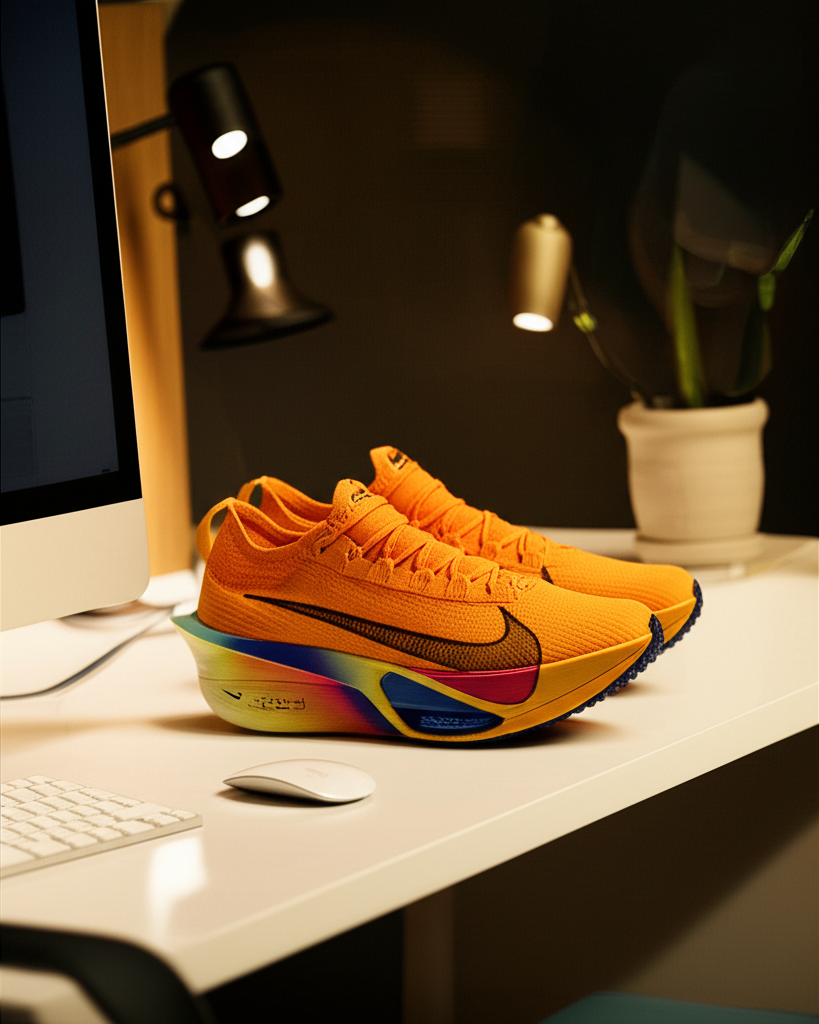
Nike’s stock lost $184 billion as critics called them innovation-dead. But their flagship marathon shoe tells a different story. We break down what the Alphafly 3 reveals about whether the swoosh still has it.
Nike is having a crisis. In June 2024, the stock cratered 20% in a single day after the company forecast a surprise revenue decline. By March 2025, shares hit a seven-year low. Global sales dropped 9% year-over-year. The running market—once Nike’s unquestioned domain—saw insurgents like Hoka and On capture double-digit market share with maximalist cushioning and performance-first marketing.
The narrative crystallized quickly: Nike stopped innovating. They got fat on retro reissues and Dunk colorways while hungrier competitors ate their lunch.
But here’s the inconvenient truth for that storyline: the Nike Alphafly 3 exists. And it might be the most technically sophisticated running shoe ever made.
So which is it? Is Nike a has-been coasting on brand equity, or a company whose innovation lab still works—just not everywhere it should?
The Alphafly 3 offers a $305 case study.
The Technology: Actually Impressive
The Alphafly lineage changed marathon running. The original (2019) and Vaporfly helped Eliud Kipchoge break the two-hour marathon barrier. When Nike claims the Alphafly is their “fastest running shoe ever,” they have receipts.
The Alphafly 3, released in early 2024, stacks three distinct technologies:
1. ZoomX Foam (Full-Length)
Nike’s PEBA-based ZoomX foam delivers some of the highest energy return numbers in the industry—roughly 85% energy return by independent testing. The Alphafly 3 runs a full-length continuous midsole of this material, eliminating the segmented construction of earlier versions that created stability issues.
The foam is also remarkably light for its cushioning level. The entire shoe weighs approximately 7.8 oz (size 10), which is staggering for this amount of stack height.
2. Carbon Fiber Plate
A full-length carbon fiber plate sits embedded in the midsole. This isn’t new—Nike pioneered the super shoe carbon plate in 2017—but the Alphafly 3’s plate is tuned specifically for marathon-distance running, offering stiffness that propels forward motion without creating leg fatigue over 26.2 miles.
3. Air Zoom Pods
Two forefoot Air Zoom units provide additional spring at toe-off. These pressurized air bags compress and rebound faster than foam alone, adding a distinct “pop” that runners describe as effortless propulsion.
The combination creates what multiple reviewers call a “bouncy trampoline” sensation—the shoe genuinely helps you run faster with less effort over distance.
4. Fast Shot Outsole
The Alphafly 3 introduced Nike’s “Fast Shot” rubber outsole technology—a strategic placement of high-grip rubber that saves weight while providing traction on wet roads. This reduced overall shoe weight compared to the v2 while actually improving grip.
The Reviews: Consensus Positive
Runner’s World, Trail & Kale, Fleet Feet, and RunRepeat all give the Alphafly 3 high marks. Common themes:
Pros:
- “Holy lightning, these are fast” (Trail & Kale)
- Significantly more stable than Alphafly 2
- Lighter and more breathable upper
- Excellent energy return over long distances
- Fit improvements address previous narrow complaints
Cons:
- Best suited for fast runners (sub-7:30 pace)
- Not a daily trainer—race-day only shoe
- Limited durability (150-250 miles)
- $285-305 price point
The consensus: if you’re running marathons competitively, this is among the best tools available.
The Contradiction: Innovation Exists, But Where?
Here’s the problem with the “Nike stopped innovating” narrative: it’s demonstrably false when you look at the Alphafly 3. This shoe represents genuine R&D, material science advancement, and competitive product design.
But it’s also a $305 marathon racing flat that most runners will never buy. The technology doesn’t meaningfully trickle down to Nike’s $80-150 everyday runners—the shoes that actually drive volume and shape brand perception.
When a casual runner walks into a running store and compares:
- Nike Pegasus 41: $140, solid but iterative updates, familiar foam
- Hoka Clifton 10: $145, bouncy maximal cushioning, fresh silhouette
- On Cloudmonster: $180, distinctive rocker geometry, aesthetic differentiation
…Nike doesn’t look like the innovation leader. They look like the safe legacy choice.
The Real Innovation Gap
Nike’s innovation lab clearly works. The Alphafly 3 proves they can still make category-defining products. But their commercial innovation pipeline—translating lab breakthroughs into products regular consumers actually encounter—has stalled.
Consider:
- ZoomX foam exists in premium running shoes, but Nike’s volume sellers still run React and basic Air units
- Carbon plates remain confined to $200+ race shoes
- The bold design language of the Alphafly doesn’t appear in their pedestrian lifestyle models
Meanwhile, Hoka made maximal cushioning mainstream across their entire line. On made visible technology (the CloudTec pods) a brand signature at every price point. Brooks delivers consistent innovation across value and premium tiers.
Nike innovates at the top. They iterate everywhere else.
The Numbers Tell the Story
Nike running market share (US specialty): Declining Hoka running market share (US specialty): Double-digit and growing through late 2025 Nike stock performance (2021-2025): Down ~50% from all-time high Nike R&D as % of revenue: Still substantial, but increasingly concentrated in performance elite
The Alphafly 3 won’t save Nike’s stock price. It’s not supposed to. But it reveals something important: the company can still innovate. The question is whether they will deploy that capability beyond race-day specials for elite marathoners.
Should You Buy It?
Yes, if:
- You’re running marathons or half-marathons competitively
- You typically run sub-7:30 miles
- You want the best available technology for race day
- You can justify $305 for a 150-250 mile shoe
No, if:
- You’re a recreational runner
- You need a daily training shoe
- Your pace is more relaxed (the tech doesn’t help as much at slower speeds)
- You want durability and value
The Bottom Line
The Nike Alphafly 3 is genuinely innovative footwear. It’s not marketing hype. The technology works, the reviews confirm it, and the shoe delivers on its promise.
But it’s also an island. Nike’s flagship proves they haven’t forgotten how to innovate—they’ve just forgotten (or chosen not) to democratize that innovation across their lineup.
For $305, the Alphafly 3 is a legitimate performance tool. For Nike shareholders watching a $184 billion market cap evaporation, it’s a reminder that having great engineers isn’t the same as having great strategy.
The innovation exists. The question is whether anyone besides elite marathoners will ever feel it.
Nike Alphafly 3: $285-305 at nike.com and specialty running retailers.
Stay ahead of the market
Weekly footwear intelligence in your inbox.